 +377 6 80 86 40 50




F1 2026 new cars new rules
F1 2026 new cars new rules introduce a new generation of Formula 1 cars that are shorter, narrower, feature simplified wings, and rely on active aerodynamics to improve efficiency and racing quality.
- Introduction: Why 2026 Is a Turning Point for Formula 1
- The 2026 Power Units: A New Philosophy
- Sustainable Fuels: More Than a Marketing Term
- F1 2026 New Cars: Smaller, Lighter, Smarter
- Active Aerodynamics: How the Cars Change Shape
- Sporting Rules: Giving Control Back to the Driver
- Strategy in 2026: Energy Is the New Tire
- Teams, Manufacturers, and Competitive Balance
- How Driving Styles Will Change in 2026
- What This Means for Fans
- FAQ – F1 2026 New Cars New Rules
- Conclusion: F1 2026 New Cars New Rules, and the Future Beyond 2030
Introduction: Why 2026 Is a Turning Point for Formula 1
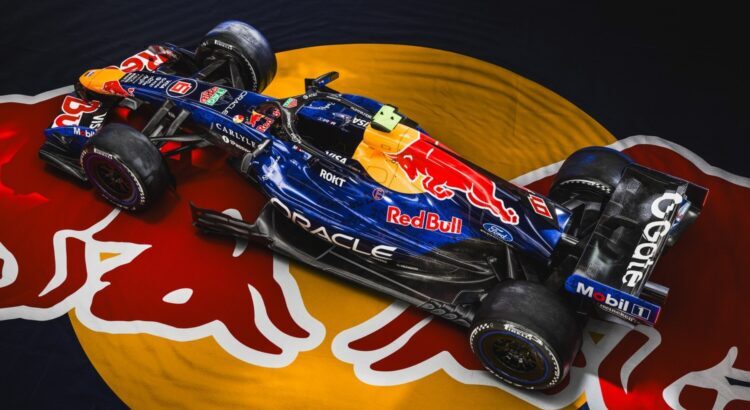
Red Bull Racing 2026 Formula 1 car designed around the new energy deployment and active aerodynamics
F1 2026 new cars new rules marks one of the most important turning points in the modern history of Formula 1. Unlike recent regulation changes, which focused on refining existing concepts, the 2026 framework reshapes the sport from its foundations. Power units, car philosophy, energy usage, and even the role of the driver are being redefined simultaneously. This is not about marginal gains — it is about changing how Formula 1 works, how it races, and how it presents itself to the world.
Brief context of regulation cycles in Formula 1
Formula 1 has always evolved through regulatory cycles. Major resets typically occur every decade or so, often triggered by a need to rebalance competition, control costs, or realign the sport with broader technological trends.
The 2014 hybrid era introduced extreme efficiency and unprecedented complexity. The 2022 regulations attempted to fix racing quality through ground-effect aerodynamics while keeping the same power unit philosophy. Between 2022 and 2025, the cars became faster, heavier, and increasingly dependent on aerodynamic optimization and software precision.
By 2025, the limits of that approach were clear. Costs remained high, performance gaps persisted, and the technical direction was drifting away from what many manufacturers and fans could easily understand or relate to.
Why 2026 is not an evolution but a reset
The 2026 regulations do not build incrementally on 2025; they deliberately break away from it.
Instead of adding layers of complexity, the new rules remove some of the most expensive and opaque elements of the current cars, while introducing a new balance between electrical and thermal power. Aerodynamics are simplified but made dynamic. Energy management becomes central, not secondary.
This reset approach allows teams and manufacturers to start from a cleaner technical baseline. It also prevents the long-term lock-in effects seen in previous eras, where early advantages could dominate for years. In essence, 2026 wipes the slate clean in areas where Formula 1 had become too rigid.
Environmental, economic, and sporting motivations
Three motivations sit at the heart of the 2026 overhaul.
Environmentally, Formula 1 aims to remain relevant in a world moving toward sustainability. Fully electric racing was never realistic for F1’s global identity, but sustainable fuels and increased electrical energy provide a credible middle path.
Economically, the sport needed to lower barriers to entry. Simplifying the power unit architecture and reducing reliance on ultra-specialized systems makes participation viable for new manufacturers without sacrificing technical prestige.
Sportingly, the objective is clear: closer racing, more driver influence, and fewer artificial tools. By reducing aerodynamic dependency and shifting emphasis toward energy deployment and race intelligence, the regulations aim to reward skill and decision-making as much as raw engineering strength.
What fans should expect differently compared to 2022–2025
For fans, the differences should be immediately noticeable. Cars will look smaller and more agile. Racing dynamics will feel less scripted, with fewer guaranteed overtakes and more battles built over multiple corners. Drivers will be visibly managing energy, choosing when to attack and when to defend.
Perhaps most importantly, early seasons under the 2026 rules are likely to be unpredictable. Reliability, learning curves, and strategic creativity may matter as much as outright speed. This sense of uncertainty — largely absent in recent years — is exactly what the new era is designed to restore.
The 2026 Power Units: A New Philosophy
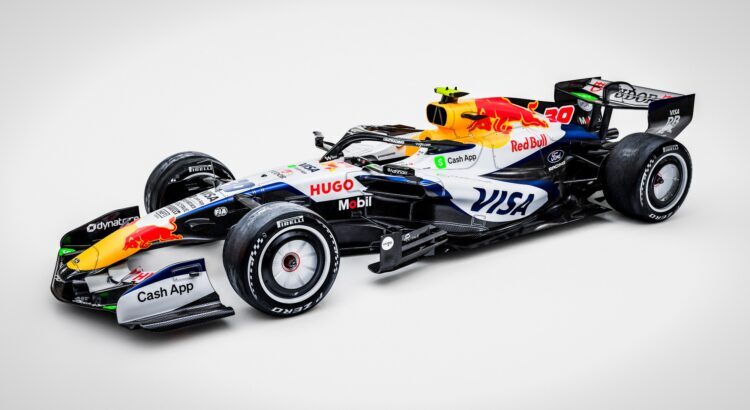
RB 2026 Formula 1 car developed for the new active aerodynamics and energy management rules
F1 2026 new cars new rules bring the most profound power-unit rethink since the start of the hybrid era. Instead of chasing ever-greater complexity, the 2026 regulations redefine what performance means in Formula 1. The new power units are built around clarity, efficiency, and strategic energy use, with the goal of making racing outcomes depend less on hidden systems and more on how teams and drivers manage their resources.
What Stays the Same: The V6 Turbo 1.6L
Despite the scale of change, the internal combustion engine itself remains familiar. The V6 turbo 1.6-litre architecture is retained, and this decision is far from conservative.
The V6 format strikes a balance between performance, efficiency, and global relevance. It allows Formula 1 to maintain extremely high power output while staying aligned with real-world engine downsizing trends. For manufacturers, this continuity protects years of expertise and investment. For fans, it preserves the unmistakable identity of modern Formula 1 rather than replacing it with something entirely abstract.
Keeping the V6 also ensures technical stability during a period of radical change elsewhere. By anchoring the power unit around a known combustion platform, the sport avoids introducing too many unknown variables at once, which could have amplified reliability risks and cost overruns.
Why the MGU-H Is Removed
The removal of the MGU-H is one of the most symbolic decisions of the 2026 regulations.
From a cost perspective, the MGU-H was exceptionally expensive to develop and operate. It required advanced materials, ultra-precise manufacturing, and highly specialized software. Only manufacturers with deep experience and long-term hybrid programs could exploit it fully, creating an uneven competitive landscape.
In terms of road relevance, the MGU-H offered little value. Its technology had almost no direct application to production vehicles, making it difficult to justify from an industrial or marketing standpoint.
Finally, the MGU-H acted as a barrier to entry. New manufacturers faced a steep learning curve simply to reach baseline competitiveness. By removing it, Formula 1 lowers the technical threshold without reducing the championship’s engineering prestige.
The Rise of Electric Power: 350 kW MGU-K Explained
The most dramatic change comes from the MGU-K, whose output rises to approximately 350 kW, nearly three times the current level.
In the current hybrid system, electrical power plays a supporting role, mainly enhancing acceleration and efficiency. In 2026, electric power becomes a primary performance component. Drivers will feel its influence not only at corner exits, but throughout entire straights and attack phases.
This shift fundamentally alters driving style. Smooth throttle application, timing of deployment, and energy preservation become critical skills. Acceleration will depend less on raw engine force and more on how intelligently electrical power is released, rewarding drivers who combine aggression with discipline.
Is the 50/50 Thermal-Electric Split Realistic?
On paper, the 2026 power unit targets an approximate 50/50 split between thermal and electrical contribution. In reality, this balance will fluctuate constantly.
Circuit characteristics play a major role. Tracks with long straights allow more sustained electric deployment, while twisty layouts demand careful energy harvesting and conservation. Weather, race conditions, and traffic further complicate the equation.
As a result, the split is best understood as a design philosophy rather than a fixed ratio. Teams that master energy flow — when to harvest, when to deploy, and when to sacrifice short-term pace — will gain a decisive advantage over a race distance.
Energy Recovery Limits: 8.5 MJ per Lap
The 8.5 MJ per lap recovery limit is one of the most misunderstood figures in the 2026 rulebook.
Rather than acting as a simple cap, it defines how aggressively teams can plan energy cycles. In qualifying, where laps are short and explosive, recovery opportunities are limited, making deployment timing critical. In race conditions, with heavier fuel loads and varied pace, recovery becomes more flexible but also more strategic.
This distinction means qualifying and race setups may diverge more than ever before. Teams must decide whether to prioritize peak one-lap performance or long-run energy stability, adding another layer of tactical depth to weekends.
Sustainable Fuels: More Than a Marketing Term

Mercedes 2026 Formula 1 car developed for the new hybrid power unit and aerodynamic rules
Sustainable fuels sit at the core of the 2026 transformation, not as a symbolic gesture, but as a structural choice shaping the future of Formula 1. Rather than abandoning combustion engines, Formula 1 has chosen to reinvent them, aligning performance, sustainability, and industrial relevance in a way few global sports can claim.
What Are 100% Sustainable Fuels?
Sustainable fuels used in Formula 1 from 2026 are synthetic fuels, not traditional biofuels. They are produced through chemical synthesis using captured carbon dioxide combined with hydrogen, typically generated via renewable energy.
The key concept is carbon circularity. CO₂ is captured from industrial processes or directly from the atmosphere, then reused as a raw material to create fuel. When that fuel is burned, it releases the same carbon that was previously captured, resulting in a closed carbon loop rather than new emissions.
From an engine perspective, these fuels are designed to behave similarly to current racing fuels. This allows Formula 1 to maintain extreme performance levels while proving that high-efficiency combustion engines can exist in a low-carbon framework.
Why F1 Chose This Path Instead of Full Electric
Formula 1’s decision not to go fully electric is both strategic and pragmatic.
From a road relevance standpoint, most of the global automotive market will continue to rely on combustion or hybrid solutions for decades, particularly in regions where charging infrastructure is limited. Sustainable fuels offer an immediate, scalable solution that can be used in existing vehicles without redesigning entire transport ecosystems.
From an industry perspective, synthetic fuels align with the strategies of major manufacturers. They allow brands to decarbonize performance vehicles, aviation, and heavy transport — areas where full electrification remains challenging. By choosing this path, Formula 1 positions itself as a research platform with real-world impact, rather than a niche electric showcase.
Performance, Reliability, and Sound
One of the first questions fans ask is whether sustainable fuels will compromise performance. The short answer is no. The 2026 regulations are written to ensure that power output remains at the highest level, with fuels engineered specifically for efficiency, knock resistance, and thermal stability.
Reliability is the greater unknown. As with any new fuel formulation, early seasons may reveal unexpected challenges related to combustion behavior and long-term engine wear. Teams and manufacturers are already investing heavily in testing to minimize these risks.
Sound is another major concern. While the engines will still be turbocharged V6 units, changes in combustion characteristics and energy deployment may slightly alter exhaust tone. However, Formula 1 has been clear that preserving a distinctive, aggressive sound profile remains a priority, even within sustainability goals.
F1 2026 New Cars: Smaller, Lighter, Smarter
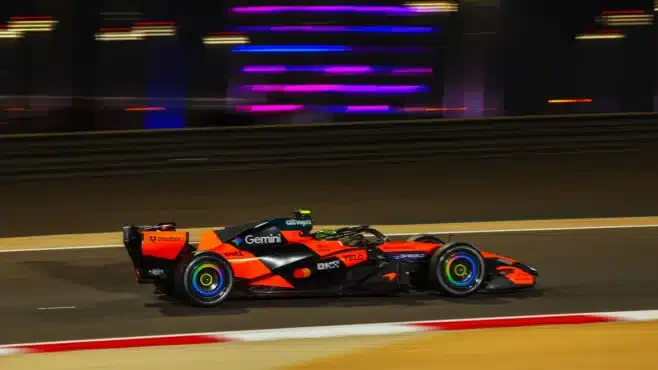
McLaren 2026 Formula 1 car reflecting the new chassis dimensions and power unit philosophy
F1 2026 new cars new rules are not only about new engines and fuels; they fundamentally redefine the cars themselves. After years of growth in size and weight, the 2026 regulations deliberately reverse that trend. The result is a generation of cars designed to be more agile, more efficient, and more raceable, aligning vehicle design with the new energy-focused philosophy of Formula 1.
Size and Weight Reduction Explained
One of the headline changes for 2026 is a weight reduction of approximately 30 kilograms. In Formula 1 terms, this is significant. Weight affects every aspect of performance: acceleration, braking, tire degradation, and responsiveness.
Alongside this reduction, cars will feature a shorter wheelbase and narrower overall dimensions. Over the last decade, wheelbases grew dramatically to optimize aerodynamic efficiency, but this came at the cost of agility and close racing. The 2026 rules intentionally pull cars back toward more compact proportions.
Why does this matter for racing? Smaller, lighter cars are easier to place precisely, especially in medium- and low-speed corners. They respond faster to steering inputs and recover more quickly from mistakes. This increases the likelihood of wheel-to-wheel battles, particularly on tight circuits and during multi-corner fights where current cars struggle to follow closely.
Will 2026 Cars Be Slower?
On pure lap time, especially in qualifying, 2026 cars are expected to be slightly slower on some circuits. Reduced downforce and a stronger focus on efficiency mean ultimate peak grip will not always match that of the 2024–2025 cars.
However, race pace tells a different story. Improved energy deployment, lighter weight, and more stable following behavior are expected to keep average race speeds competitive. More importantly, cars should lose less performance when running in traffic, which has a direct impact on overtaking opportunities.
The key trade-off is between downforce and efficiency. Instead of generating maximum grip at all costs, 2026 cars prioritize controllable performance across an entire lap. This shift favors consistency and racecraft over single-lap optimization, aligning car design more closely with racing quality rather than headline lap records.
Active Aerodynamics: How the Cars Change Shape
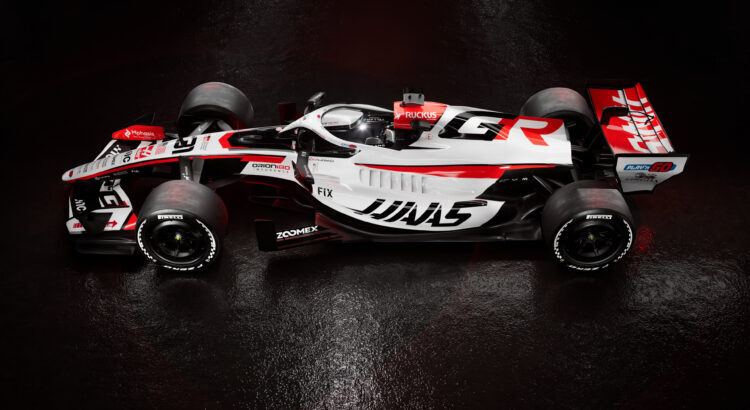
Haas 2026 Formula 1 car showcasing the simplified aerodynamic and power unit architecture
Active aerodynamics is one of the most visually and conceptually striking elements of the 2026 regulations. Instead of relying on a single overtaking aid, Formula 1 introduces a system that allows the car to adapt its aerodynamic profile in real time. This approach is designed to improve efficiency, reduce dependence on artificial boosts, and give drivers greater control over how and when they attack.
What Is Active Aerodynamics?
In simple terms, active aerodynamics means that parts of the car can change position while driving. These changes alter how air flows over and around the car, directly affecting speed and grip.
Unlike passive aerodynamics, where wings and bodywork are fixed, active systems adjust depending on whether the car needs more speed or more grip. The goal is not to make the car faster at all times, but to make it more adaptable to different phases of a lap.
For non-technical fans, the easiest way to understand it is this: the car “breathes” as it drives, opening up on straights to reduce drag and tightening in corners to increase stability and grip.
X-Mode vs Z-Mode
The 2026 cars operate mainly in two aerodynamic configurations: X-mode and Z-mode.
X-mode is the low-drag configuration. It is used primarily on straights and during high-speed acceleration phases. By reducing aerodynamic resistance, X-mode allows the car to maintain speed more efficiently, which is especially important given the increased reliance on electrical energy.
Z-mode is the high-downforce configuration. It is activated in braking zones and corners, where grip and stability are critical. In this mode, the car generates more downforce, improving cornering speed and driver confidence.
The transition between these modes is automatic and regulated, ensuring fairness across teams. However, drivers still influence how effectively each mode is exploited through braking, throttle application, and energy deployment timing.
Why This Replaces Traditional DRS
Traditional DRS was designed as a simple solution to a complex problem: overtaking in turbulent air. While effective, it often produced passes that felt inevitable rather than earned.
Active aerodynamics aim to reduce that artificial feel. Instead of a single, binary overtaking tool, performance gains come from how well a driver manages the car’s aerodynamic state in combination with energy use and positioning on track.
This shift increases driver involvement. Attacks may take longer to develop, unfolding over multiple corners rather than one straight. Defending becomes more strategic, and small mistakes are more likely to be punished. The result is racing that feels more organic, even if it sometimes produces fewer instant overtakes.
Sporting Rules: Giving Control Back to the Driver
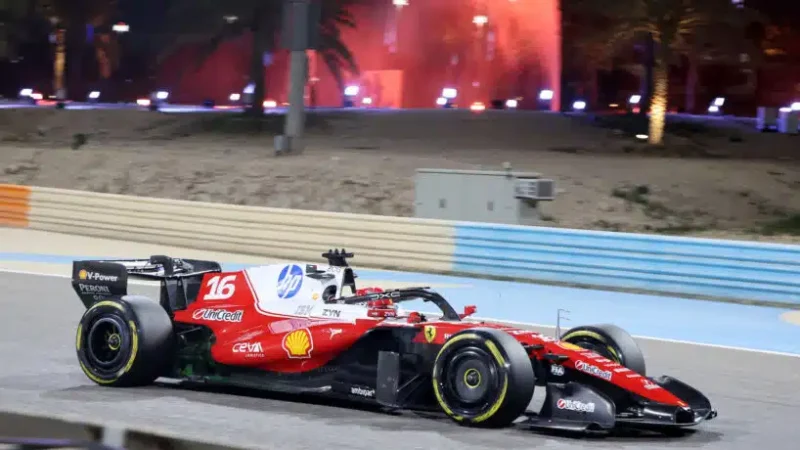
Ferrari 2026 Formula 1 car built under the new 2026 technical regulations
One of the clearest messages behind the 2026 regulations is the desire to restore the driver as the central actor in Formula 1. While technology remains essential, the sporting rules are designed to reduce automation and predictability, replacing them with tools that demand timing, awareness, and risk management from the cockpit.
The End of Classic DRS
The Drag Reduction System was introduced to solve a real problem: cars struggling to overtake due to aerodynamic turbulence. While effective, DRS gradually became one of the most criticized elements of modern Formula 1.
From a sporting perspective, DRS often made overtakes feel inevitable. Once a car entered the detection zone within range, the outcome was frequently decided before the braking point. This reduced defensive skill and removed tension from many battles.
Fans also disliked the artificial nature of the system. Overtakes sometimes felt disconnected from driver performance, relying more on timing zones and activation rules than on racecraft. In some cases, drivers appeared to wait deliberately for DRS zones rather than attempt genuine moves elsewhere on the circuit.
By removing classic DRS, the 2026 rules aim to bring back uncertainty, forcing drivers to create opportunities rather than triggering them.
Manual Override Mode Explained
Manual Override Mode is not a direct replacement for DRS, but a fundamentally different concept. Instead of altering aerodynamics instantly, it allows drivers to deploy additional electrical power from the hybrid system for a limited time.
Crucially, this deployment comes at a cost. Using extra energy in one phase of the lap means having less available later. Drivers must decide whether to attack immediately, defend against a rival, or conserve energy for a better opportunity.
The strategic risks and rewards are central to the system. An aggressive driver may gain track position but compromise later pace. A conservative approach may preserve energy but miss critical moments. Unlike DRS, success is not guaranteed — it depends on judgment, track position, and the broader race context.
This balance is exactly what the 2026 sporting rules are designed to encourage: overtaking driven by skill, not certainty.
Strategy in 2026: Energy Is the New Tire

Williams 2026 Formula 1 car designed under the new cost cap and technical framework
In 2026, race strategy in Formula 1 changes in a fundamental way. For years, tires were the main strategic variable. Now, energy becomes just as important. Drivers are no longer managing only grip and wear — they are managing how and when the car uses its power.
Think of energy like a battery in a smartphone. You can use it all quickly and recharge later, or use it carefully to make it last. The fastest choice is not always the smartest one.
Fuel Flow Limits and 70 kg per Race
Each car in 2026 is allowed a maximum of 70 kilograms of fuel per race, which is less than in previous seasons. This does not mean cars are slower by default, but it does mean wasting fuel is no longer an option.
In the past, teams often pushed hard early and adjusted later. With stricter limits, every lap counts. Drivers must be precise, avoiding unnecessary acceleration and braking. The goal is to finish the race with nothing left — not too much, and not too little.
This makes races more about control and timing rather than constant full attack.
Lift-and-Coast: More or Less?
“Lift-and-coast” means lifting off the throttle earlier before a corner and letting the car slow naturally, instead of braking hard at the last moment.
Will drivers do this more in 2026? Yes, but differently.
Instead of saving fuel constantly, drivers will choose when to save energy and when to push. These decisions can change lap by lap depending on traffic, position, and race situation.
To avoid boring races, teams use energy-saving moments strategically, often in places where it has minimal impact on lap time. The result should be less visible fuel saving and more bursts of intense racing at key moments.
Software, AI, and Driver Feedback
Modern Formula 1 cars rely heavily on software. In 2026, this becomes even more important because energy use must be carefully controlled.
The car’s systems help the driver by suggesting how much energy to use and when. However, the driver still makes the final decision. A computer can calculate, but it cannot feel grip, pressure, or opportunity.
The challenge is finding the right balance between human instinct and algorithm guidance. The best teams will not be the ones with the most automation, but the ones who use technology to support, not replace, the driver.
Teams, Manufacturers, and Competitive Balance
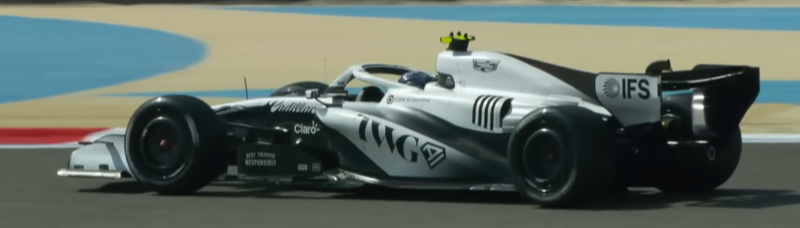
Cadillac F1 Team 2026 Formula 1 car built for the new generation of Formula 1 regulations
The 2026 regulations are not only about technology; they are also about fairness. Formula 1 wants a grid where success is earned through smart decisions and long-term planning, not locked in by early advantages. To achieve this, the rules reshape how manufacturers enter the sport, how teams develop their cars, and how dominance is controlled.
New Era Advantage: Audi and Honda RBPT
For new or returning manufacturers, 2026 offers something rare in Formula 1: a true clean start.
Audi enters the championship with an engine designed from day one for the 2026 rules. There are no compromises with older systems, no inherited limitations, and no need to unlearn past solutions. This “clean-sheet” approach allows engineers to optimize every component around the new balance between electric and thermal power.
Honda’s involvement through RBPT follows a similar logic. Instead of adapting existing technology, development focuses on long-term efficiency, reliability, and energy management. The goal is not to win immediately at all costs, but to build a stable foundation that improves year after year.
This long-term vision contrasts with short-term gains. Teams chasing immediate performance may struggle if their designs lack flexibility under evolving conditions.
Factory Teams vs Customer Teams
One of the biggest questions for fans is whether factory teams will gain an even larger advantage, or whether customer teams can finally close the gap.
The 2026 rules are designed to limit how much an engine supplier can tailor performance exclusively for its own works team. Standardized elements, stricter software oversight, and energy deployment rules reduce the scope for hidden advantages.
As a result, the performance gap between factory and customer teams should shrink, especially over race distance. While factory teams will always benefit from closer integration, the difference is expected to be measured in fine margins rather than large step changes.
Cost Cap and Development Restrictions
The cost cap remains a central pillar of competitive balance in 2026. Teams cannot simply outspend rivals to recover performance. Instead, they must choose carefully where to invest.
Development is further controlled through limits on wind tunnel testing and CFD simulations. Teams that perform well receive less development time, while struggling teams receive more. This sliding scale actively prevents runaway domination.
Together, these restrictions make sustained dominance harder to achieve. Success becomes more fragile and more dependent on adaptability. In theory, this means more teams capable of fighting at the front over the life of the regulation cycle.
How Driving Styles Will Change in 2026
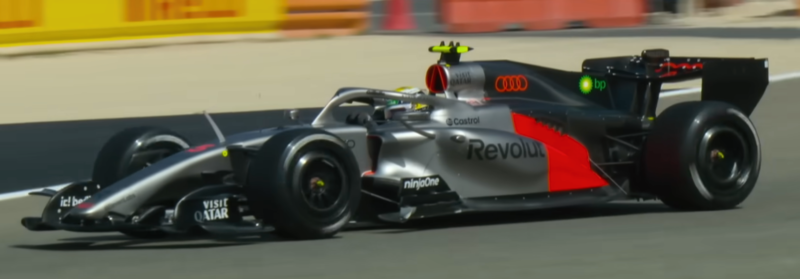
Sauber / Audi 2026 Formula 1 car marking Audi’s full entry under the new regulations
The 2026 regulations do more than change cars and engines — they change how drivers must drive. In Formula 1, speed alone is no longer enough. Drivers must now balance attack, control, and energy awareness, making driving style a decisive performance factor.
Aggressive vs Intelligent Drivers
In previous seasons, aggressive driving was often rewarded. Late braking, constant pushing, and maximum attack could be sustained thanks to predictable energy deployment and aerodynamic tools like DRS.
In 2026, this approach becomes riskier. Drivers who attack too often may drain electrical energy too early, leaving them vulnerable later in the lap or race. Overdriving the car can also reduce efficiency, costing both speed and strategic options.
The drivers who benefit most are those who combine pace with intelligence:
- knowing when to push
- knowing when to wait
- understanding the bigger race picture
Smooth inputs, precise timing, and adaptability become just as valuable as raw speed.
Managing Energy While Racing Wheel-to-Wheel
Wheel-to-wheel racing in 2026 adds a new layer of complexity. When two cars fight closely, energy use becomes unpredictable. Defending a position may require extra electrical deployment, while attacking too early can leave a driver exposed moments later.
Real race scenarios illustrate this clearly. A driver may choose to stay behind through one corner to save energy, then attack decisively in the next braking zone. Another may defend aggressively, only to run out of electrical power on the following straight.
The mistakes that will be punished are subtle but costly:
- deploying energy too early
- defending without considering recovery zones
- reacting emotionally instead of strategically
In this new era, the best drivers are not those who fight the hardest on every lap, but those who choose when to fight — and when not to.
What This Means for Fans
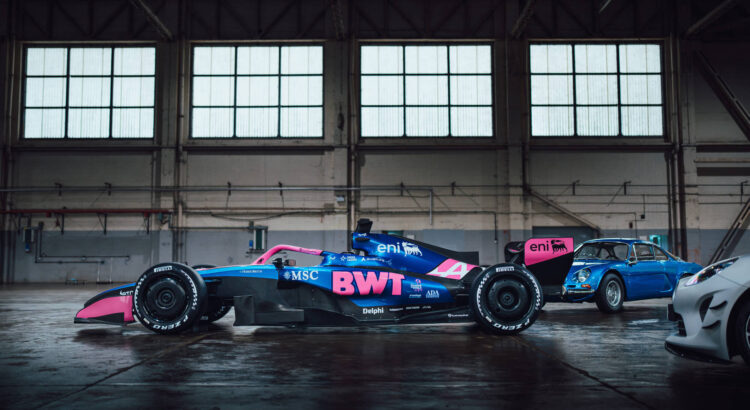
Alpine 2026 Formula 1 car built to comply with the new engine and efficiency-focused regulations
Beyond the technical details, the real test of the 2026 regulations is simple: are races more enjoyable to watch?
For fans of Formula 1, the changes are designed to shift the experience from predictable outcomes to evolving stories that unfold lap by lap.
H3 – Better Racing or Just Different Racing?
The goal of 2026 is not to maximize the number of overtakes, but to improve their quality.
In recent seasons, many passes were enabled by DRS and felt almost guaranteed. While effective, this often removed tension. Fans could predict an overtake several corners in advance, reducing the sense of drama.
In 2026, overtakes may be fewer in number, but harder to execute. Drivers will need to build moves over multiple corners, manage energy carefully, and exploit mistakes rather than waiting for a system to activate. When passes happen, they should feel earned — and therefore more satisfying to watch.
Will Races Be More Unpredictable?
Unpredictability is one of the key promises of the new rules, especially in the early seasons.
New power units, new fuels, and new aerodynamic concepts inevitably bring reliability challenges. Early in the regulation cycle, small issues can have large consequences, leading to unexpected retirements or performance swings from one race to the next.
Learning curves will also differ between teams. Some will adapt quickly, others more slowly. This variation creates fluctuating form, surprise results, and opportunities for midfield teams to shine — elements that have been less common in recent years.
Is 2026 the Start of a New Golden Era?
Many fans compare 2026 to the 2014 regulation reset, which reshaped Formula 1 for a decade. That era brought groundbreaking technology, but also long periods of dominance and reduced competitiveness.
The 2026 reset aims to keep the innovation while avoiding the downsides. Cost controls, development limits, and a more balanced technical philosophy are designed to prevent one team from locking in superiority too early.
Whether this becomes a true “golden era” will depend on execution. If the balance between technology, racing, and unpredictability is right, 2026 could mark the beginning of a more competitive and engaging Formula 1 for years to come.
FAQ – F1 2026 New Cars New Rules

Aston Martin 2026 Formula 1 car developed for sustainable fuels and revised aerodynamic concepts
McLaren and Williams impressed with reliability and mileage, completing 422 laps each, a key indicator early in a new regulation cycle.
Red Bull Racing showed strong potential despite running conservatively, and is already seen by rivals as the benchmark.
Cadillac F1 Team delivered a positive surprise for a brand-new entrant, with solid pace and a credible development baseline.
Aston Martin struggled during testing, showing a clear pace deficit compared to the leading teams.
| Element | F1 2025 | F1 2026 | Change |
|---|---|---|---|
| Maximum length | 5,600 mm | 4,800 mm | −800 mm |
| Maximum width | 2,000 mm | 1,900 mm | −100 mm |
| Maximum wheelbase | 3,600 mm | 3,600 mm | No change |
| Minimum weight (no fuel) | ~798 kg | ~768 kg | −30 kg |
| Design philosophy | Stability / aero | Agility / energy | Reset |
Conclusion: F1 2026 New Cars New Rules, and the Future Beyond 2030
F1 2026 new cars new rules are not designed as a temporary experiment. They represent a long-term vision for Formula 1, built to remain relevant well beyond a single regulation cycle. Unlike past resets driven by urgent problems, the 2026 framework anticipates the future and aims to stay flexible as technology, industry, and audience expectations evolve.
Why this regulation is designed to last
One of the main weaknesses of previous eras was rigidity. Once a team found a major advantage, the rules made it difficult to correct the imbalance without drastic intervention. The 2026 regulations address this by combining cost caps, development limits, and simplified architectures that are easier to adjust over time.
By removing ultra-specialized systems and focusing on energy management rather than hidden complexity, the rules give regulators more room to fine-tune performance without rewriting the entire rulebook. This adaptability is key to long-term stability and prevents the sport from locking itself into another decade of predictable outcomes.
Sustainability and spectacle: finding the balance
For the first time, sustainability is not treated as a constraint, but as a performance parameter. Sustainable fuels and stronger electrical systems are integrated into the racing logic itself, rather than layered on top of it.
At the same time, spectacle remains central. Smaller cars, reduced aerodynamic dependency, and greater driver responsibility are all designed to improve racing quality. The intent is clear: sustainability should not dilute excitement, and excitement should not undermine credibility.
If this balance holds, Formula 1 gains something rare — a future-facing identity without sacrificing its core appeal.
What success will look like in 2027–2028
The true test of the 2026 rules will not be the opening races, but the seasons that follow.
By 2027–2028, success will look like:
- multiple teams capable of winning races
- drivers making a visible difference through skill and judgment
- closer competition without artificial aids
- technology that feels relevant, not excessive
If fans see variety, tension, and genuine battles for position — without the sport constantly rewriting its own rules — then the 2026 reset will have achieved its goal.
