 +377 6 80 86 40 50



What Drivers See From the Track | Monaco Grand Prix Hospitality Guide

What Drivers See From the Track
Inside the Monaco GP From a Driver’s Eyes
The Monaco Grand Prix is often described as a postcard on television: shimmering water, luxury yachts, sunlit terraces and iconic corners. But inside a Formula 1 cockpit, Monaco becomes something entirely different — a tunnel of concrete, shadows, walls and milliseconds. Drivers do not “see Monaco”. They survive Monaco, using a narrow visual corridor and an extreme concentration level that fans rarely imagine.
This guide blends real cockpit experience, immersive driver perspective and expert analysis of visibility, corner approach, sensory overload and track geometry. It helps fans understand what F1 drivers truly see and process at 250–300 km/h — and why certain hospitality locations like high-elevation terraces provide the most authentic insight into the lap.
In this article you’ll learn:
- how drivers process corners, shadows and reference points,
- what their field of vision actually looks like at Monaco,
- why some corners arrive blind or semi-blind from inside the car,
- how terraces and grandstands differ from the cockpit view,
- and what fans should choose if they want to experience Monaco “like a driver”.
1. The Unique Visual World of a Monaco GP Driver
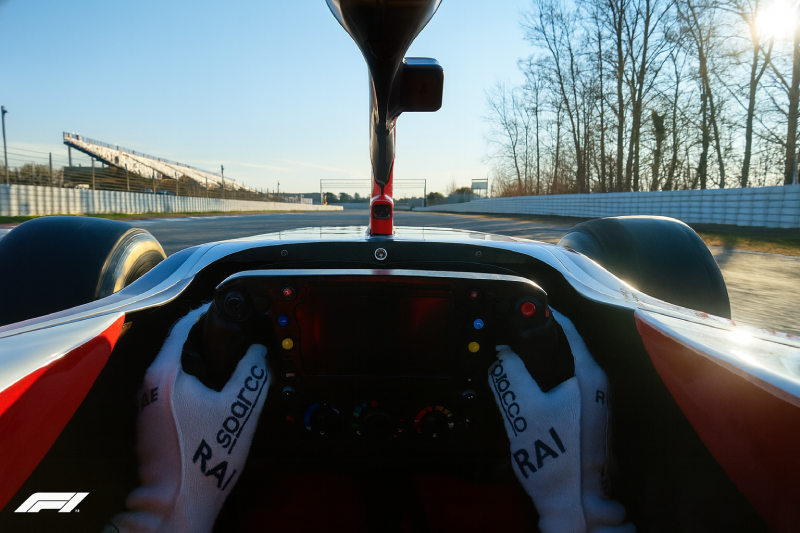
From the inside, Monaco is claustrophobic. The walls create a visual tunnel, the halo restricts the vertical opening, and the streets compress the horizon. Drivers rely on a handful of visual anchors:
- the curvature of the barriers,
- the white lines and painted edges,
- a few brake boards,
- tarmac texture changes,
- and shadows when switching between open light and narrow streets.
There are no wide landscapes, no time to admire buildings, and no panoramic harbour view. The race is seen through a “2-second window of future tarmac”, framed by barriers coming at extreme speed. Monaco forces drivers into a vertical strip of vision measuring only a few degrees above the horizon.
Yet fans often forget that while they enjoy terraces, rooftops, yachts or Grandstand K, drivers see none of that in detail. They only register shapes, colours and the feeling of enclosure. Where spectators see a theatre, drivers see a laser-guided survival corridor
2. The Driver’s Field of Vision in Monaco
The cockpit position is extremely low. Drivers sit almost lying down, with their legs elevated and their eyes just above the steering wheel rim. Combined with the halo structure, the field of vision becomes narrow and extremely forward-focused.
Practically speaking, a Monaco cockpit view is:
- Vertically: mostly asphalt and walls; very little sky except at Beau Rivage.
- Horizontally: a tight corridor ahead; peripheral vision detects movement, not fine detail.
- Internally: a constantly changing steering wheel display with LED lights, gear indicator and deltas.
Drivers must read the road surface, spot the apex and find the exit point — all within fractions of seconds. The brain filters out everything else: fans, yachts, terraces, scenery and details vanish from conscious vision.
3. What Drivers See: Corner-by-Corner Breakdown
Sainte-Dévote – A Blind Fight at the Start
During the race start, Sainte-Dévote is chaos. Drivers see almost nothing except the narrowing road and the shadow of trees. The braking point is semi-blind; vision is blocked by the rear wing of the car ahead, and the corner appears suddenly.
Opposite the entry, terraces form a vertical wall of shapes and colours. The Symptuous Terrace (7th floor, Ermanno Palace) is one of the few terraces drivers can visually identify thanks to its unique angle and height — but even then, they only perceive a blur of shapes.
On exit, drivers catch a brief flash of the sea and sunlight before the horizon closes again as they climb Beau Rivage.
Beau Rivage → Massenet – Compression of the Horizon
This is one of the fastest visual compressions of the lap. At 270–280 km/h uphill, drivers see barriers converging toward a vanishing point. Shadows from buildings and terraces flicker across the halo. Only the crest of the hill and the tarmac colour changes act as references.
Terraces and balconies appear only as silhouettes; the driver’s focus is entirely on the camber change leading into Massenet.
Casino Square – Beauty at 230–240 km/h
On television, this is the most iconic view. Inside the car, drivers barely register the Casino, the fountains or the elegant façades. Everything passes within one to two seconds. The steering input is delicate, and the car dances over the bump. Vision jumps from apex to exit, never to the buildings.
Mirabeau & Grand Hotel Hairpin – Slow Speed, Human Presence
Here, Monaco becomes more “human”. The speed drops so much that drivers can actually observe silhouettes of fans leaning over the railings, rooftops full of spectators and terraces stacked above them. The hairpin is the only place where drivers may notice individual faces.
Portier – The Tunnel Threshold
At Portier, drivers see the last strong sunlight before entering the tunnel. The harbour flashes on the left; terraces feel extremely close on the right. This area gives a rare sense of open space before the tunnel collapses the world into darkness.
The Tunnel – A Sensory Shock
Brightness drops instantly. The engine noise doubles as sound bounces off concrete. Vibrations increase; the car feels skittish. The exit of the tunnel is a bright rectangle that the driver aims for, ignoring everything else.
Nouvelle Chicane – Fans at Eye Level
Bursts of sunlight after the tunnel can overload the eyes briefly. Yachts and terrace rows create a visually dense frame around the braking zone. Drivers see almost nothing of the scenery — only the kerbs and the braking point.
Tabac Corner – A Tunnel of Colour
Tabac is visually stunning for fans, but overwhelming for drivers. They see only the barrier, the apex and the track edge. In peripheral vision, the harbour and Grandstand K appear as streaks of blue and colour.
Swimming Pool – Precision at Warp Speed
The chicanes happen so fast that individual details disappear. For drivers, this is rhythm and muscle memory — the choreography that fans can appreciate far better from terraces than from onboard.
Rascasse – The “Human Stadium”
At Rascasse, drivers are surrounded by people. Terraces above, balconies close on both sides, and grandstands almost on the racing line. This is the corner where the atmosphere is physically felt from the cockpit.
Anthony Noghes → Start/Finish
On exit, the driver sees the bridge, pit wall, grandstands and lights. This is the emotional straight: every lap, every quali run begins and ends here in a corridor of noise and colour.
—-
4. What Drivers Process in a Split Second
Monaco forces the brain to operate at the extreme edge of human processing speed. Drivers cannot rely on wide visual cues or generous margins. Every action is compressed into milliseconds, and the mind prioritises information with surgical precision.
At any moment, a driver is simultaneously analysing:
- Grip evolution: spotting darker rubbered-in lines, patches of dust, damp zones or micro-slides.
- Car balance: small steering corrections, rear instability, front-end bite into tight radius corners.
- Rivals: who is braking early or late, who is struggling with traction, who is attacking the kerbs aggressively.
- Race management: tyre temperatures, delta to lap time, gaps, fuel saving, battery deployment.
- Track threats: marbles, debris, yellow flags, changing shadow-light transitions.
Incredibly, top drivers have extra mental capacity left for radio communication. You hear drivers like Verstappen, Norris or Hamilton calling out rain clouds, track limit abuses or issues with rivals — all while driving millimetre-perfect laps between the walls.
5. Do Radio Messages Distract Drivers?
Even at Monaco, radio is not a distraction when handled correctly. Teams are extremely careful about when they send messages. Engineers avoid speaking in the middle of:
- the Swimming Pool sequence,
- Sainte-Dévote,
- Tabac Corner,
- Casino Square,
- and the approach to the tunnel.
They prefer straights or low-workload zones:
- main straight after Anthony Noghes,
- the run from Portier to the tunnel,
- in/out laps,
- Safety Car periods.
Monaco is intense, but not chaotic inside the cockpit. Radio messages arrive in tiny, perfectly timed bursts—“Strat 6”, “Box box”, “Rain expected Turn 3”—and the driver processes them instinctively.
6. What Drivers Cannot See (But Fans Think They Can)
From the outside, Monaco feels visually overwhelming. From inside the car, it is shockingly narrow. Drivers cannot see:
- the sea as a wide panorama (only micro-glimpses),
- the full shape of terraces or buildings,
- the layout of the harbour,
- detailed views of yachts (only abstract blocks),
- the open sky except for rare sections like Beau Rivage.
The driver’s world is reduced to:
- a 1.5–2 meter wide corridor,
- high-frequency shadows and light transitions,
- barrier curvature,
- kerbs and micro-texture of the track.
This is why Monaco is often described by drivers as a concentration tunnel. It is not scenic. It is survival. For 78 laps.
7. Why Understanding Cockpit Vision Helps Fans Choose the Best Hospitality
Many fans choose their viewing location based on photos, pricing or recommendations. But very few consider what drivers actually experience on a lap. Understanding driver vision helps fans pick spots that reveal Monaco’s true difficulty.
- Sainte-Dévote & Start: where chaos unfolds, braking is blind and mistakes happen.
- Beau Rivage: where confinement and horizon compression illustrate pure driver trust.
- Tabac Corner: where cars pass at insane proximity to the wall with the harbour as backdrop.
- Swimming Pool: the best place to observe the precision that drivers feel as “blur”.
- Rascasse: the most immersive place to see driver–crowd proximity.
This is where high-elevation terraces — especially those around Sainte-Dévote, Beau Rivage and the Harbour — offer the closest real-world match to the cockpit experience. They allow fans to perceive:
- how the car dances between walls,
- how drivers adjust based on grip and balance,
- the tiny errors punished instantly,
- the dynamic of traffic and pit strategy,
- and the visual rhythm of an F1 lap.
8. How Fans Can Recreate a “Driver Perspective”
To experience Monaco as close as possible to the cockpit reality, fans should prioritise locations that highlight:
- braking zones,
- wall proximity,
- rapid direction changes,
- tunnel-to-light transitions,
- driver reaction windows.
The strongest placements include:
- Symptuous Terrace (Ermanno) – Turn 1 + Start/Finish
- Terraces on the Beau Rivage climb
- Grandstand K – Harbour + Tabac intensity
- Harbour terraces around the Swimming Pool
- Tabac-side hospitality
These allow fans to observe:
- how late drivers brake and adjust lap after lap,
- how the rear snaps under throttle,
- how close the car is to the wall (often 2–3 cm),
- and how much Monaco demands from the eyes and brain.
—
9. The Emotional Layer: What Drivers Feel vs What Fans See
Monaco is not only a technical challenge; it is also an emotional one. From the cockpit, certain sections carry
a meaning that goes beyond pure lap time.
Qualifying Laps vs Race Laps
In qualifying, drivers push with almost no margin. From inside the car, the barriers do not feel static — they feel like moving objects rushing in. The visual tunnel narrows; the mind enters a state often described as “flow”.
During the race, the vision changes rhythm. Drivers manage tyres, fuel and battery. They look further ahead, leave
slightly more margin and focus more on traffic, strategy and risk management.
First Laps on Thursday vs Final Laps on Sunday
On Thursday, the track is dusty, the grip is low and reference points are still approximate. The visual world feels “slippery” — the car floats more, understeer appears earlier, braking zones feel vague.
By Sunday, the rubbered-in line is visible to the eye. Drivers can literally see where the grip is, and their gaze follows that darker line like a thread through the city.
The Psychological Weight of the Walls
Every driver knows that one small lapse in concentration at Monaco can end their race and sometimes their weekend.
This knowledge sits silently at the back of the mind and subtly changes how the visual field is processed.
- risk is weighed corner by corner,
- the brain filters danger faster,
- confidence expands or contracts the visual tunnel.
When a driver is fully confident, the track feels wider. When doubt creeps in, the walls feel closer, even though
nothing physically changed.
10. Fans vs Drivers: Two Different Monacos
For fans in terraces, yachts or grandstands, Monaco is a festival. They see:
- the harbour filled with yachts,
- the sunlight on the buildings,
- the incredible density of people,
- celebrities in the paddock and on balconies,
- post-race fireworks, flags and celebrations.
For drivers, Monaco is a tunnel and a stopwatch. They see:
- walls, kerbs and a narrow strip of asphalt,
- micro-signals from the car,
- white lines and brake boards,
- the timing delta flashing green or red.
The beauty of Monaco is that both worlds coexist — the visual theatre for fans and the visual tunnel for drivers.
The more a guest understands the cockpit perspective, the more they will appreciate the vantage point they choose
for watching the race.
11. Monaco GP Cockpit Vision – FAQ
Can F1 drivers see the sea while driving in Monaco?
Only in very small glimpses. On the exit of Sainte-Dévote and in a few parts of the harbour section, drivers may catch a brief flash of blue water, but it appears only as a background colour. They do not enjoy a wide scenic sea view; their focus is always on the track itself.
Do F1 drivers actually notice terraces and yachts during the race?
They notice them as shapes and reference blocks, not as detailed scenes. Terraces and yachts help frame the track
visually, but drivers do not focus on the people, logos or décor. At race speed, they only perceive colours, masses
and approximate positions.
Is Monaco more visually difficult than other F1 circuits?
Yes. Monaco combines narrow streets, close walls, fast light changes, tight radius corners and almost no run-off.
The visual workload is significantly higher than on modern circuits with wide asphalt run-offs and large open sight lines.
How far ahead can an F1 driver see at Monaco?
In most corners, drivers effectively work within a 1–2 second window of visible tarmac before the next turn, crest
or wall blocks the view. On straights, this window extends slightly, but Monaco rarely offers long, calm sight lines
like other circuits.
Do drivers “see” the crowd and celebrities?
They know they are there, but they rarely register them clearly during competitive laps. Under a Safety Car or on
in-laps, drivers sometimes notice more detail—flags, VIP terraces, even specific celebrities—but during flat-out laps, the brain filters them out in favour of performance-relevant information.
How can a fan best experience Monaco like a driver?
By choosing locations that expose the difficulty rather than only the glamour: Sainte-Dévote, Beau Rivage, Tabac,
the Swimming Pool complex and Rascasse. High-elevation terraces near these zones offer the best combination of
driver-like perspective and panoramic understanding of what the car is doing.
12. Conclusion
Inside the cockpit, the Monaco Grand Prix is not a scenic postcard. It is a violent symphony of walls, shadows, apexes, vibrations and reflexes, repeated for lap after lap with almost no margin for error. Drivers live inside a narrow visual tunnel where every centimetre matters and every reference point is critical.
From terraces, yachts and grandstands, fans see the other Monaco: the harbour, the architecture, the choreography of cars threading between barriers, the city celebrating the race. They see the beauty that drivers can only feel, never fully admire.
This contrast — between the brutal precision of the cockpit and the breathtaking spectacle seen from hospitality — is what makes Monaco the most iconic and emotionally charged event on the Formula 1 calendar.
